
In a path-breaking decision with far-reaching socio-economic impact, the Centre has allowed woman employees to nominate her son or daughter for family pension, instead of her husband, according to an official statement issued on Monday.
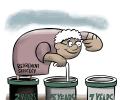
In a path-breaking decision with far-reaching socio-economic impact, the Centre has allowed woman employees to nominate her son or daughter for family pension, instead of her husband, according to an official statement issued on Monday. Previously, family pension was granted to the spouse of a deceased government servant or pensioner, while other family members became eligible only after the spouse's ineligibility or demise, the statement said. Union Minister of State for Personnel Jitendra Singh said that the Department of Pensions and Pensioners' Welfare (DoPPW) has introduced an amendment to the Central Civil Services (Pension) Rules, 2021, allowing female government employees or pensioners to grant family pension to their eligible child/children after their own demise, in place of of their spouse.
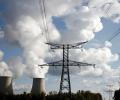
Rising energy demand could tilt India's energy basket towards fossil fuels from coal to oil, natural gas.

As many as 76 per cent of the respondents did not expect economic reforms to move forward, given the upcoming 2014 general elections.

'Concerns about India's future are hampering private investment.' 'If the private sector sees strategy, teams and execution on these issues, this will inspire confidence in India.' 'This should be our main strategy for 2017,' says Ajay Shah.

The Indian government will present the annual budget for 2016-17 on February 29.

'Till the time you have the equations right the market will remain concerned.' 'If the (coalition) government is taken care of, then probably (the markets will) come back to its rhythm.'
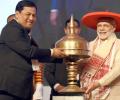
Inaugurating the two-day 'Global Investors Summit' hosted by Assam, Modi said the National Democratic Alliance government has speeded up the functioning of official machinery and "we want all programmes to be completed before target".

'The Indian government is better prepared this time and has reached out to all contenders and not putting all eggs in one basket.'
.jpg)
Economy still faces many challenges and 'relatively big' downward pressures such as increasing difficulties for businesses and the emergence of economic risks, the Central Economic Work Conference said.
Prime Minister Manmohan Singh on Wednesday said the government will act boldly and decisively to revive economic growth.

'In the short term the relationship will get worse.'
The Bhartiya Janata Party (BJP) pulled up the government for a total policy failure, resulting in grave economic crisis.

CEOs expect populist measures in the Budget, to help the poor and marginalised, who make up for the largest section of voters.

'I hope that Macho Man agrees to debate her, because I think she will do spectacularly well in the debate.'

'One wishes that today's 'take no prisoners' brand of politics would give way to an understanding of the national interest that is shared by both government and Opposition.'
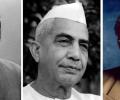
The government had earlier announced the country's highest civilian honour for L K Advani and Karpoori Thakur.

Panagariya has advocated a more liberalised spending, arguing that greater capital expenditure could relax some of the infrastructure bottlenecks facing the country.

'Investment creates capacity and reduces inflation. Income, employment, and savings rise.'
The central government has set itself a tight deadline of July this year for completing a series of reforms in the civil aviation sector.

The decisive election victory for the Narendra Modi-led National Democratic Alliance has created a conducive environment for policy actions and should help in economic recovery, Reserve Bank of India Governor Raghuram Rajan said on Tuesday.

... if high oil prices persist or stock prices correct sharply.

India will also play an increasingly important role as one of the Asia-Pacific region's major economic growth engines, helping to drive Asian regional trade and investment flows.

He said the government has already begun implementing tax reforms.

He was reviled by critics in his party as a neo-liberal in disguise but till the end, he retained his belief in secularism and the humanity of Communism.

The Budget sets out a comprehensive vision.
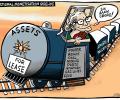
But use of that word -- privatisation -- is not encouraged. This seems to be a classic case of reforms through subtle signals, observes A K Bhattacharya.
The Governor of the Reserve Bank of India may need all the suave charm of the fictional British spy to sell that same hard-nosed agenda to a powerful new prime minister.
Markets ended at record highs on Monday on hopes that the new government would unveil reforms in the infrastructure space.

'With this amendment, permanent employees will cease to exist.' 'The government should give a human touch and human face to labour reforms.' 'Ideas like survival of the fittest, might is right, etc, are rules of the jungle.' 'They cannot give new terms like hire and fire to jungle law.'

Echoing Prime Minister Narendra Modi's views that improving the health of financial markets alone cannot fuel growth, G20 business leaders on Friday said vigorous efforts should be made to go beyond fiscal and monetary policy to kickstart world economy and create jobs.

India's political infighting is denting business confidence.
.jpg)
Indian companies are keenly waiting for reforms on rules related to land acquisition, labour, coal and power sector, and foreign direct investment in insurance sector.

P Chidambaram says all options are on the table.

Sajjid Chenoy, India economist at JP Morgan is the new part-time member.

According to the global financial services major, after the BJP's 'historic' election victory on May 16, hope for structural reforms has gone up.
For a long time, the Indian economy has been drifting without a credible monetary anchor.

There is, between Rao's tenure as PM and the current Modi regime, a powerful resonance of how transition can be managed. Rao's tenure saw many scams -- one where he was supposedly approached by Harshad Mehta with a bribe for making the securities scam go away. The Opposition insisted on a JPC. Despite knowing a JPC report would undermine him politically, Rao agreed to one, saying he had 'nothing to hide'.
